







01
Source aggregation
Auction records, archival catalogues and verified references are brought together for professional research.
Built for experts, dealers and auction professionals.
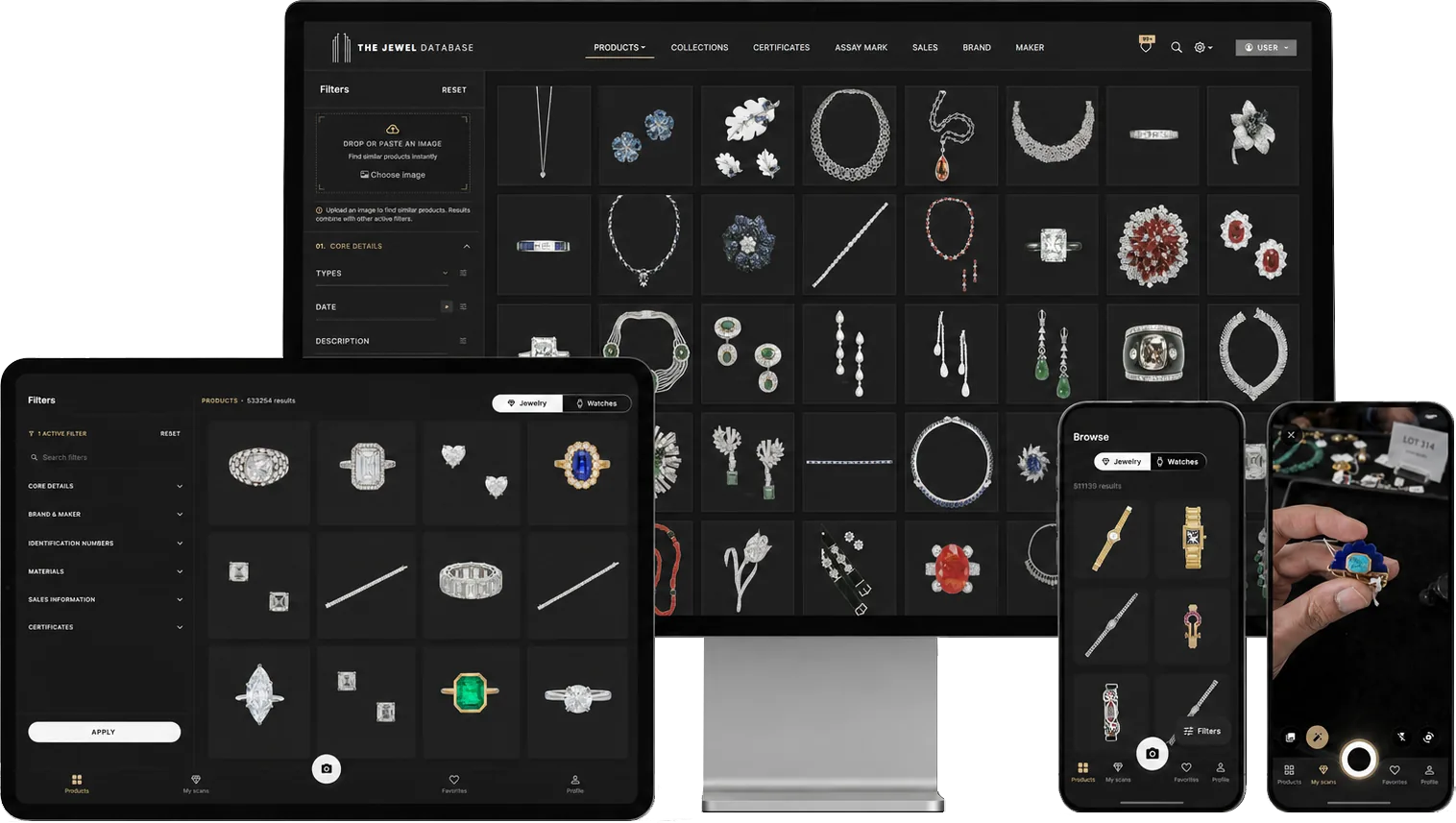
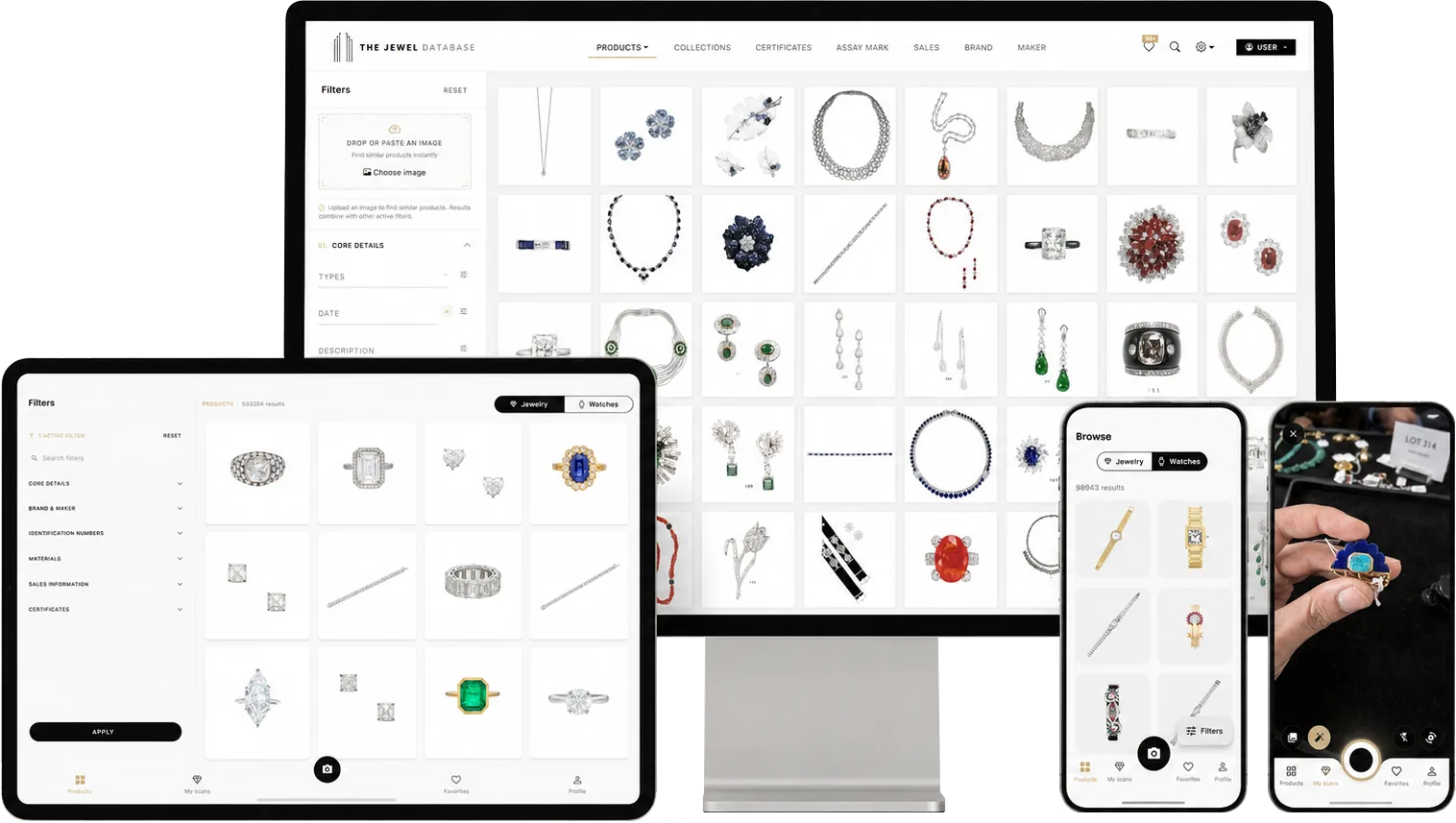
Jewel Database helps professionals identify jewelry, watches and gemstones by connecting visual matches, makers, assay marks, certificates, historical catalogues and auction records in a single research workspace.
References, catalogues, marks and historical records organized for professional research.
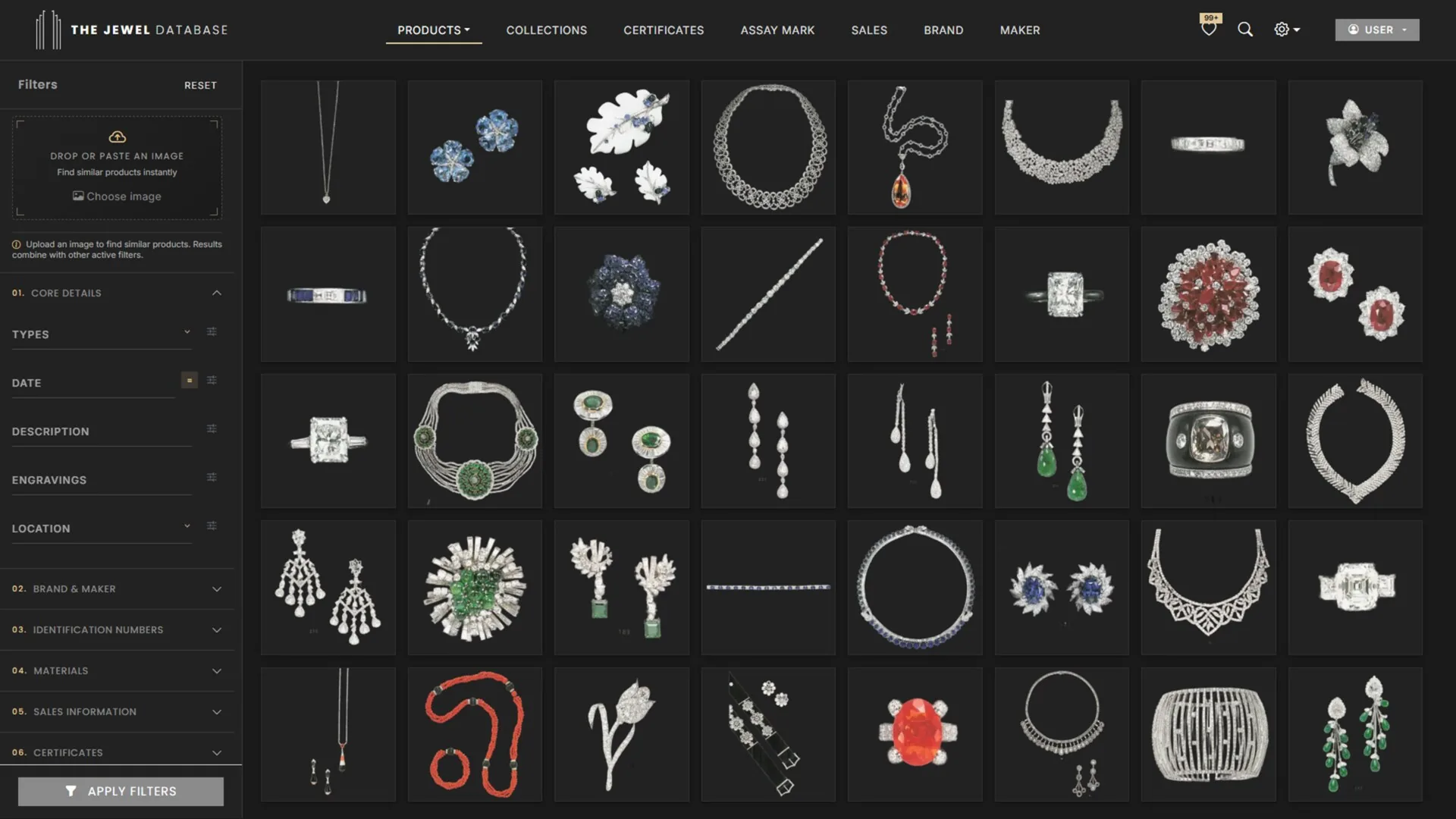
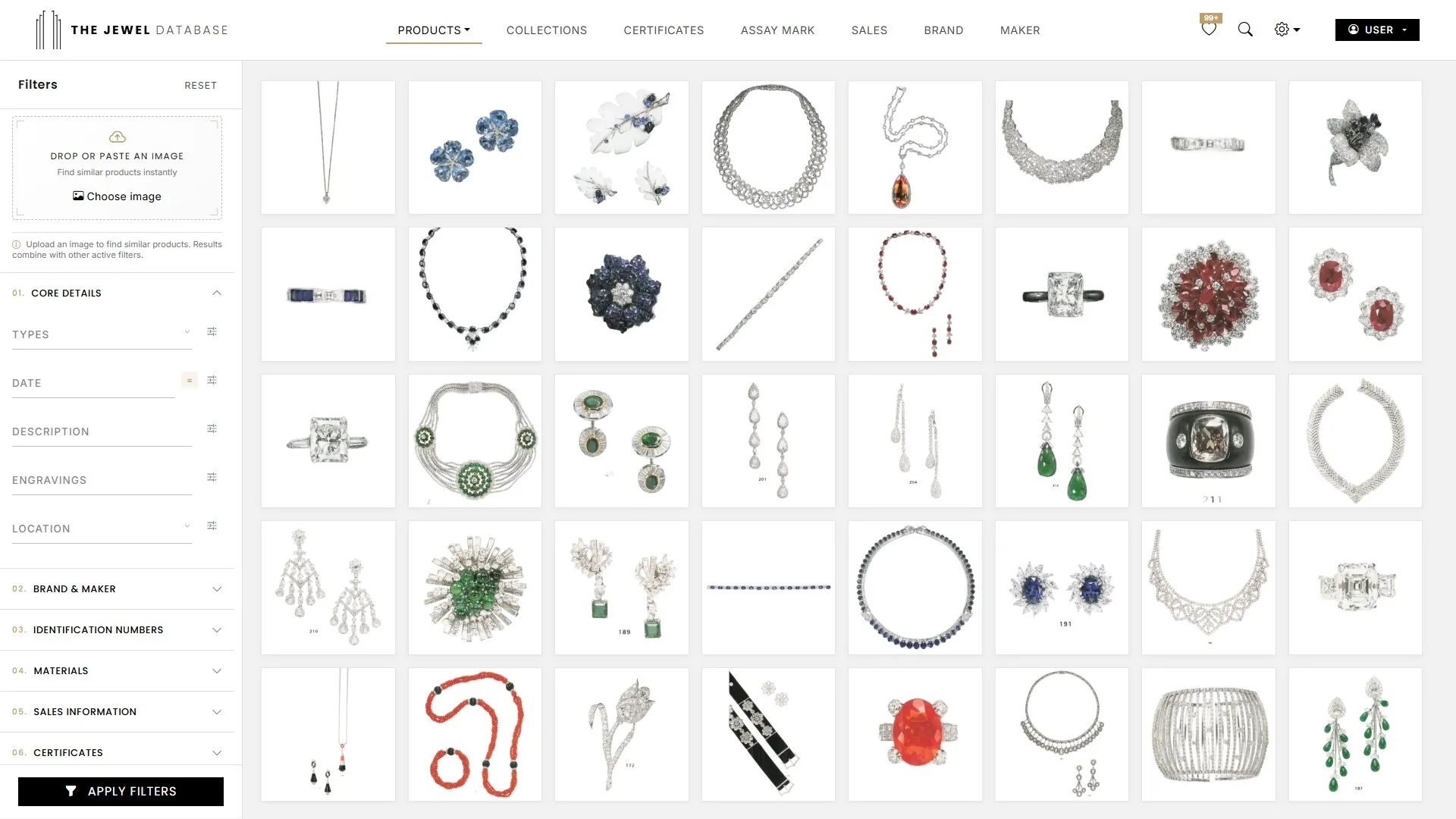
Traditional research often means searching through fragile catalogues, incomplete archives, scattered auction results and uncertain references.
JEWEL DATABASE brings these sources together into one professional workspace designed for faster, more reliable identification and market comparison.
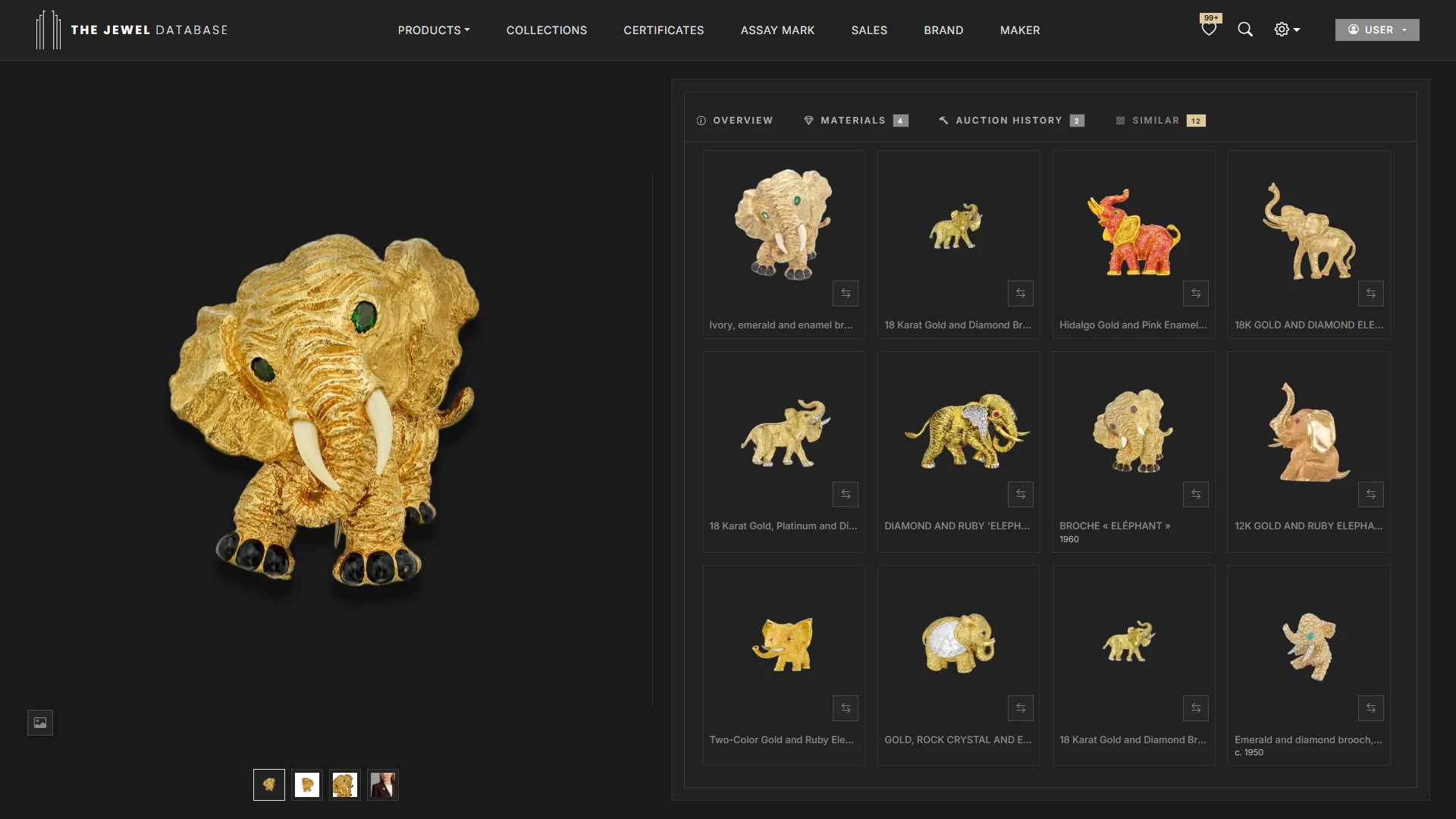
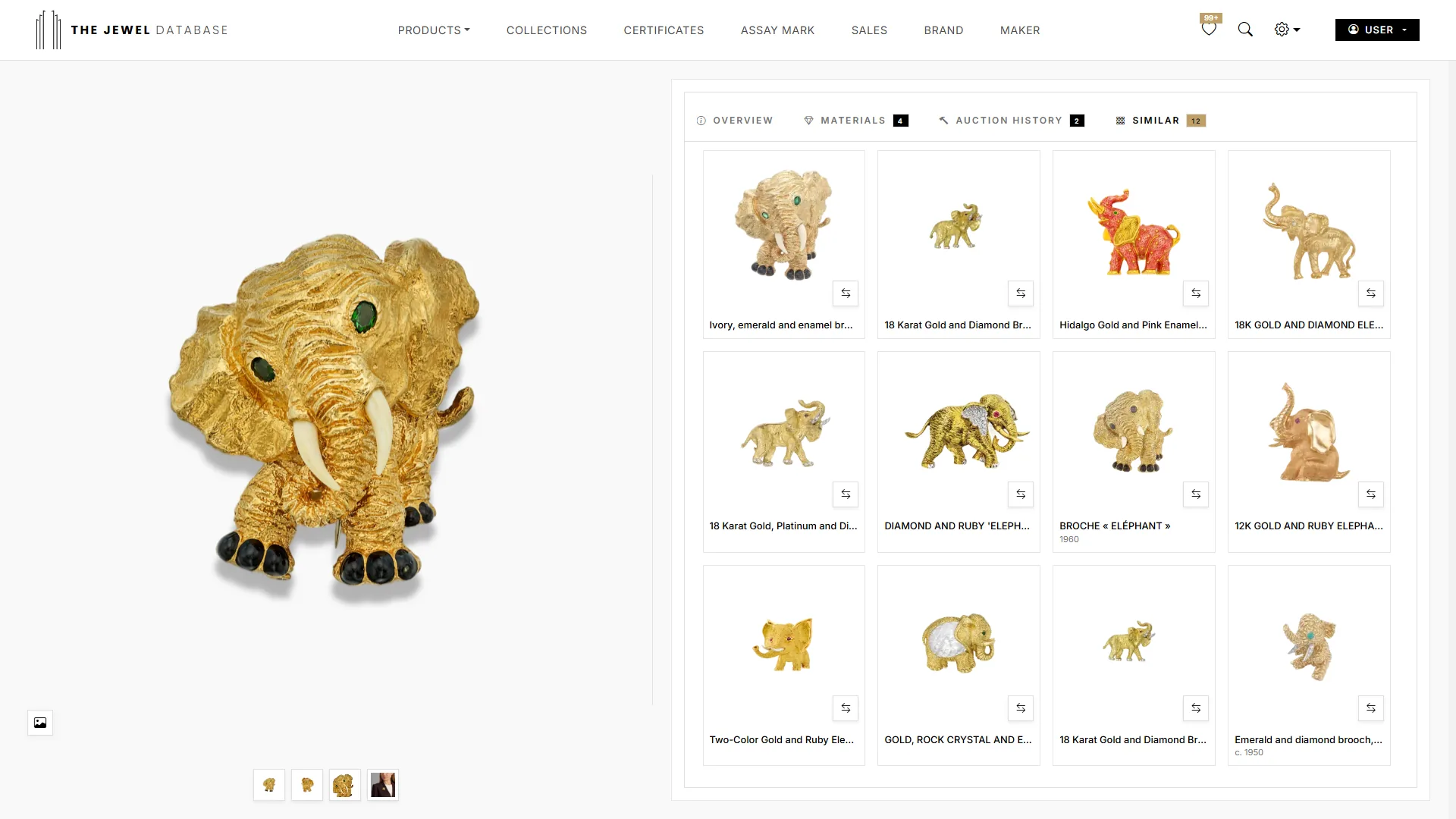
Upload an image or scan a piece from a mobile device. JEWEL DATABASE analyzes visual characteristics and surfaces similar references, auction records and related pieces across the database.
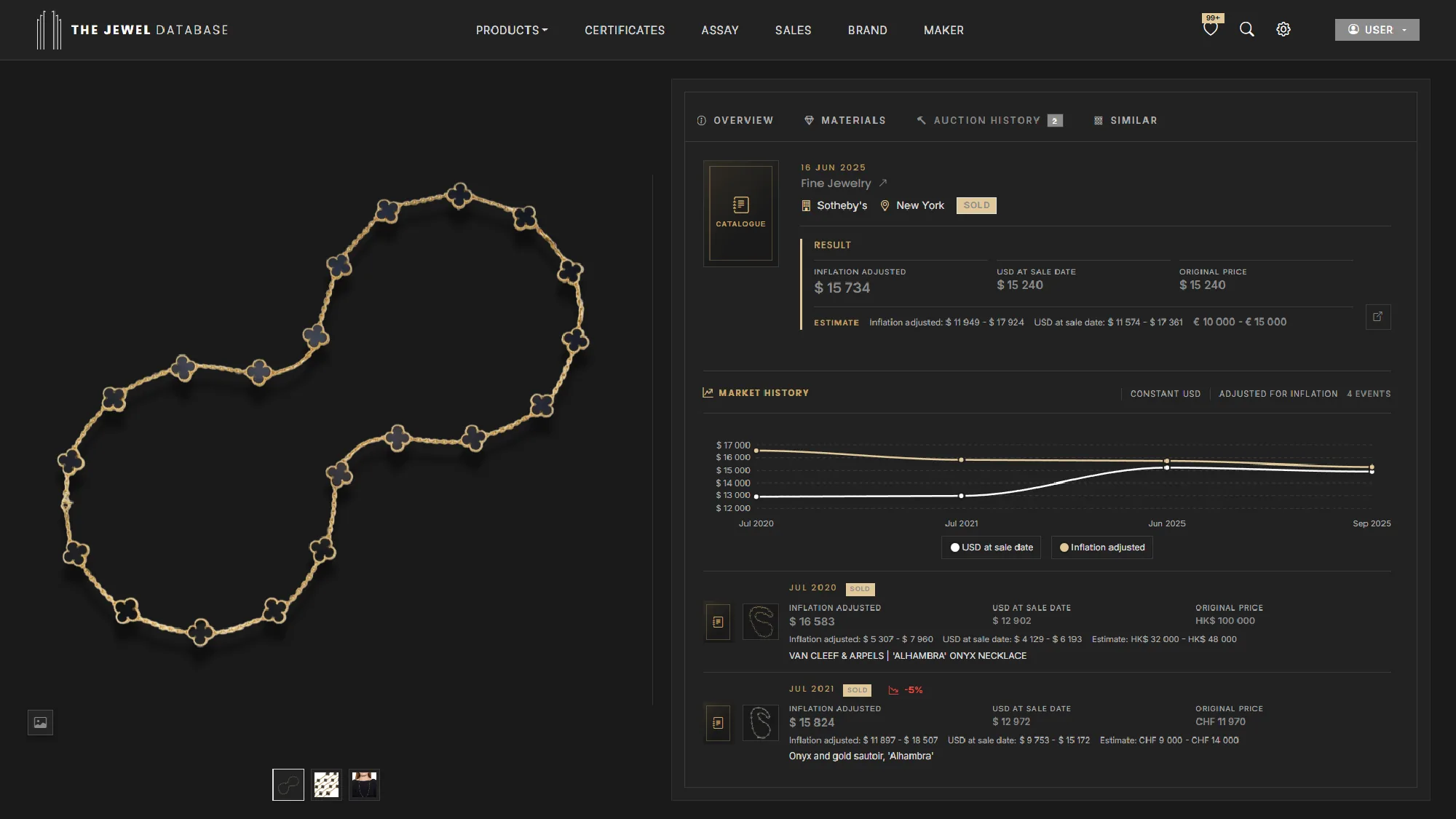
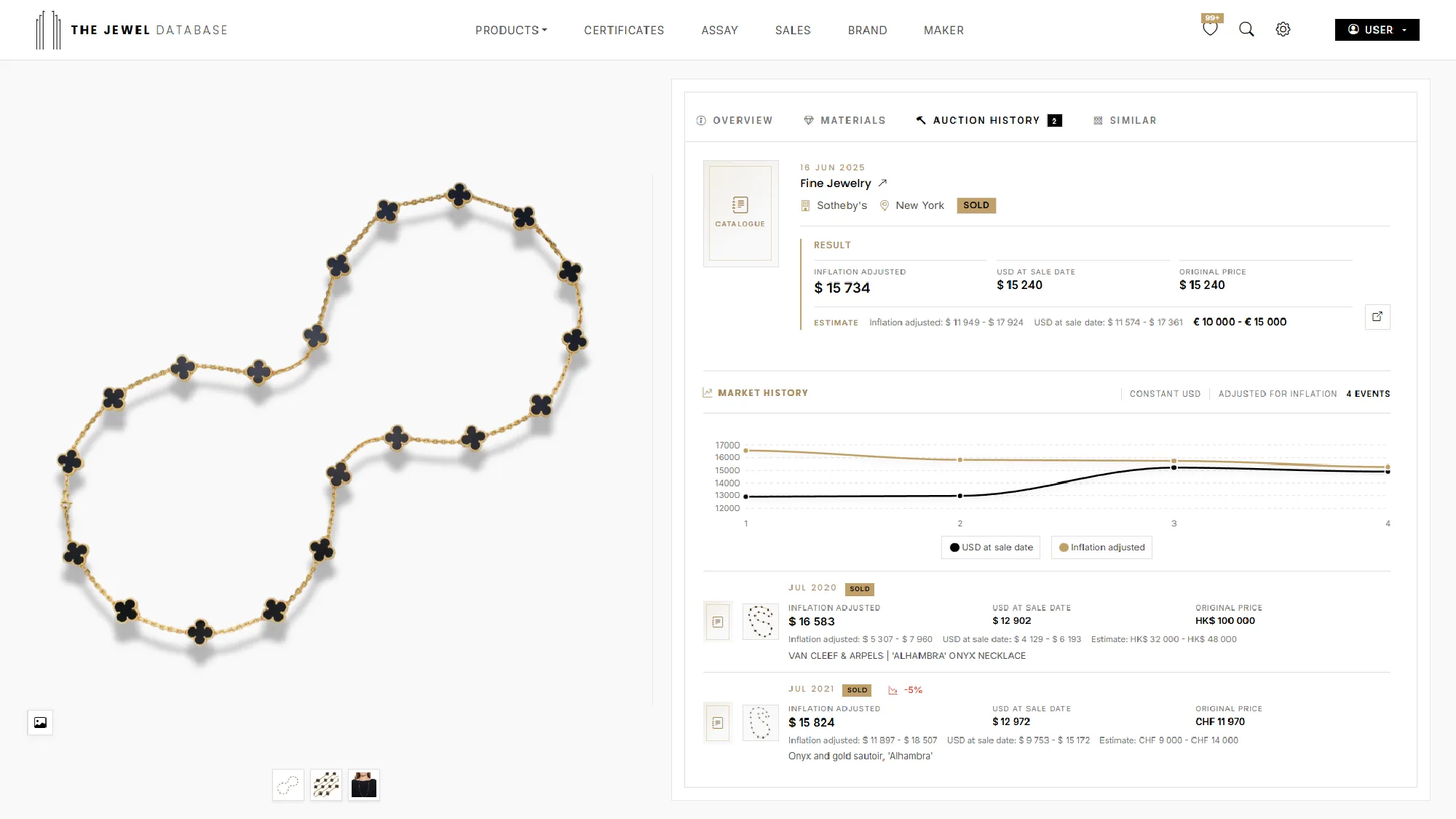
Access historical auction results, comparable sales, price evolution and market context. Values can be normalized with currency conversion and inflation-adjusted indicators to better understand past and current performance.
Ask Codex, Claude or another compatible assistant to find a piece, compare auction results, identify a maker or review a certificate without leaving your conversation.
See how to connectSearch jewelry, watches and past sales
Find visually similar references from an image
Your access and usage limits remain protected
Auction records, archival catalogues and verified references are brought together for professional research.
Historical catalogues are structured into searchable references, images and contextual records.
Prices, makers, materials, marks, dates and sale contexts are standardized for stronger comparison.
Search, visual comparison, market context and documentation support the way professionals actually work.
Data is collected, structured and enriched from auction records, archival catalogues and verified sources, so each reference can support professional research, comparison and documentation.
Three levels of access designed for independent professionals, growing teams and high-volume experts.
The core database and essential search tools.
Advanced features and higher search volumes for growing professionals.
The ultimate tier for high-volume experts and power users.